Showing posts with label Basketball. Show all posts

Friday, November 7, 2014

Friday's Weekly Rap-Up - November 7, 2014 - "Kobe Bryant On 'Em" - Sho Baraka

"Kobe Bryant On 'Em" - Sho Baraka - Lyrics


Kobe Bryant
Every Friday morning I get together with a group of guys to play basketball at 6:00 AM. It's an early start, but I look forward to Friday morning every week. It's a competitive outlet, a way to get some exercise, and a chance to still show that we've still got some game. Some of the guys who play are from our church, so that helps build community between us. Others are coworkers or neighbors, or random guys we invite to play who become friends. We've got different levels of skill too. Some of the guys have played at a college-level. Some played in high school, and some have never played organized basketball. It doesn't matter though.

Sometimes our frustration shows when we miss shots (and we miss many) or our teammates don't meet our expectations. We get mad when we miss layups or allow people to score on us. Some of us get angry at times. I'll admit, I can get upset when teammates don't play defense or switch which man we're defending, or don't call out screens; things I'd have expected to hear from college players I played with or coached over the years.

Sho Baraka's song "Kobe Bryant on 'Em" is actually a mixtape response to another song, "Air Jordan on 'Em" from rapper K-Drama. At first blush it may seem that these songs are simply about two of the best basketball players to have ever played the game. That'd be partially true. K-Drama thinks Michael Jordan is the best. Sho Baraka, thinking Kobe is the best, playfully responds with "Kobe Bryant on 'Em", noting that he's "a Cali man through and through." But, there's more here than two rappers creatively communicating their favorite basketball players. You may think, "what does it mean to 'Air Jordan on 'em?', or 'what does it mean to Kobe Bryant on 'em?'" Well, it has less to do with basketball, and more to do with biblical history and a Christian's steadfast witness of the Gospel in light of opposition and trial.

This K-Drama response is most helpful. K-Drama derives the term mostly from the scriptural account found in the book of Numbers, when God commanded Moses and the Israelites to possess the land of Canaan. After a survey, many of the men did not want to enter into the land, as they found the inhabitants to be much stronger than themselves. Joshua and Caleb did not see it that way and were undeterred, comforted by the strength of the Lord. Sho Baraka expands on this idea with lines like:

Thursday, March 27, 2014

My March Madness: 2015

The bracket came out on Sunday. The "First Four", or first round (this name is terrible) begins tonight. Second round games start on Thursday. Admittedly, this is a difficult time of the year for me. No, not because of some tragic event's anniversary or haunting reminder. The reason: college basketball.

Having spent seven years involved in Division I women's college basketball, being around basketball teams and having friends that play, have played, or currently coach Division I men's basketball, it's tough to avoid basketball on a daily basis from October to February. It is impossible to escape in late February and March as teams are winding down their seasons and vying for automatic NCAA bids in their conference championships. It was a heart breaker seeing William and Mary lose in the CAA tournament final, as well as my Michigan State Spartans losing in overtime in the Big Ten tournament final. But it's always fun to see a team like Albany win on a last second shot by a guy who lost his mother within the past year, or a team like sub-.500 Hampton win the MEAC as a 6-seed. These small schools play mostly for school pride, with hopes of adding a bit more to each school's endowment, while seeing a spike in admission applications.

The first four days of the NCAA tournament offer some of the year's best basketball games, with many of us watching or listening to a variety of games. Many of us picked our games in our brackets, filling out multiple brackets to cover for Cinderella scenarios or our Alma mater. Workplace productivity on that first Thursday and Friday of action often slows to a crawl.

I have been blessed through basketball, without a doubt. For many basketball traditionalists, women's basketball is, at best, a fringe sport, but it provided me an experience many students never have as undergraduates Working in women's basketball doesn't sound impressive to many, but there are a great deal of former players, high school coaches and others who covet graduate assistant coaching positions, with the hopes of becoming a college coach. I was blessed to have that opportunity. I was able to gain experience in film editing, strength and conditioning practices and was afforded access to some of the best coaching minds in basketball. I also benefited from the physical activity of daily practices, the academic advantages of preferred scheduling and an abundance of athletic apparel. My experience at Michigan State led me to Marshall University, then William and Mary. I got to travel across the country, saw some fantastic cities, ate in great restaurants, and even went to Mexico and Colombia due to the game of basketball. These are all fine blessings themselves.

But the danger of March is finding ourselves emotionally tied to the outcome of a 40-minute contest played by 18 to 24-year-olds; as if we have something on the line ourselves. Taking pride in a program's successes is fine, and being disappointed when they lose is acceptable too; but our emotions cannot use the game of basketball as their barometer. For the coaches, this is even more of a struggle, as their ability to provide for their families depends on their performance. Thankfully, for us as Christians, our right standing with the Lord and his acceptance of us is not based on our works, but through our faith in Christ, and His imputed righteousness.

Michigan State - 2000 National Champions
However, that radical grace is not demonstrated in the halls of athletic departments throughout the NCAA. If you want to see who's hiring, just check out the The Market on the NCAA's website. It's full of basketball job opportunities, and will have even more here in the next few weeks. (There are only 87 openings as I write this, but you can be sure there will be many more in the coming weeks.) Staff will lose their jobs, and the coaching carousel will continue. I remember the tension that existed following our losses in our conference tournaments, wondering whether or not I'd be able to continue graduate school or have a job that next week. It is almost assured that all of the coaches that you see on the sidelines in the NCAA Tournament will have the same jobs next year, or move on to a larger school. Of the 351 Division I basketball teams, 68 made the NCAA tournament, which means there are 283 other head coaches that must be concerned for their livelihood and families, not to mention each team's assistant coaches, operations staff, graduate assistants, office staff, or training staff. If a head coach is fired, you can be sure nearly every other staff member will be looking for other employment.

Even those coaches that are successful at smaller colleges try to make a jump to bigger schools, and sometimes pay the price. Take Manhattan College coach Steve Masiello as an example. After getting to the NCAA Tournament with Manhattan College last year, Masiello was poised to become the new coach at the University of South Florida in the American Athletic Conference. He was a student at the University of Kentucky from 1996 to 2000, and listed on his resume that had graduated. However, further review showed that his resume was inaccurate and that he had not in fact graduated from Kentucky. You may not need a bachelors degree to coach college basketball, but questions of character sometimes speak louder than basketball coaching skills. (And, in my opinion, character should sit higher than simple basketball coaching skills.) Masiello and his Manhattan Jaspers won the MAAC conference tournament and will actually face Kentucky, Masiello's now-Alma-mater, if they beat Hampton in their first round play in game.

Some coaches understand that losing a game in the NCAA tournament should not define you. Creighton University basketball coach Greg McDermott's post game speech after his team lost to Baylor last year should make us breathe a sigh of relief that there are some level-headed coaches out there who care for their players and staff.


As we are in the thick of March Madness, remember that these coaches (both in men's and women's basketball) and their staffs are under tremendous pressure to succeed and to find definition by wins and losses. Please pray for them, their hearts, and for their families. Athletes in Action and the Fellowship of Christian Athletes faithfully minister to coaches and athletes (who are typically pretty stubborn and prideful due to their success in coaching), and will be doing so at the Final Four for both the men and women.

Some coaches are rooted in Christ, and we should be praying for them. Scott Drew, head coach at Baylor, has displayed this well. In addressing a Baylor losing streak last year, Drew made sure people knew what he felt was most important for his players. Drew said to the team's chaplain, "We may not win another game this year, and I may be a horrible coach, but if any of these guys leave without knowing Christ, that will be the real loss." Drew also said, “Winning the game of life is a lot more rewarding than a 40-minute basketball game that’s so temporary. To have an opportunity to help be a part of an impact on a young person’s life is the best feeling.”
thankful.


I was constantly challenged by this tension of success and the pressure that basketball brings, and it is an ugly perspective to have. I am thankful that Christ's acceptance does not ride on wins and losses. So, I'll be watching this weekend again, just like everyone else, but with a perspective that the wins and losses in my bracket do not determine my identity in Christ or control my emotions.

In closing, as a Michigan State graduate, the Spartans are my obligatory pick. If they struggle in the tournament, be sure to check in and see how I'm handling it. Go Green, Go White!


Philadelphia, PA, 2011

Cancun, Mexico, 2010

Chicago, IL - Athletes in Action training camp, 2009

Bolivar, Colombia - Sharing my testimony, 2009

Impromptu practice at a Cartagena, Colombia school, 2009

On the bench at Marshall

New Orleans, LA, Cafe De Monde - C-USA Championship, 2009


Monday, March 18, 2013

My March Madness

The bracket is out. (This is the best one, with tip-off times and TV networks). Admittedly, this is a difficult time of the year for me. No, not because of some tragic event's anniversary or haunting reminder. The reason: college basketball.

Having spent seven years involved in Division I women's college basketball, being around basketball teams and having friends that play, have played, or currently coach Division I men's basketball, it's tough to avoid basketball on a daily basis from October to February. It is impossible to escape in late February and March as teams are winding down their seasons and vying for automatic NCAA bids in their conference championships.

The NCAA tournament actually starts Tuesday and Wednesday nights with the First Four, but Thursday, Friday, Saturday and Sunday will offer some of the year's best basketball games, and many of us will be watching or listening. Many of us will be picking games in our brackets, filling out multiple brackets to cover for Cinderella scenarios or our Alma mater. Workplace productivity on Thursday and Friday for many will slow to a crawl (At 11:15 AM CST on Thursday I might be a little distracted.)

Michigan State - 2000 National Champions
I have been blessed through basketball, without a doubt. For many basketball traditionalists, women's basketball is, at best, a fringe sport, but it provided me an experience many students never have as undergraduates. I was able to gain experience in film editing, strength and conditioning practices and was afforded access to some of the best coaching minds in basketball. I also benefited from the physical activity of daily practices, the academic advantages of preferred scheduling and an abundance of athletic apparel. My experience at Michigan State led me to Marshall University, then William and Mary. I got to travel across the country, saw some fantastic cities, ate in great restaurants, and even went to Mexico and Colombia due to the game of basketball. These are all fine blessings themselves.

But the danger of March is finding ourselves emotionally tied to the outcome of a 40-minute contest played by 18 to 24-year-old's; as if we have something on the line ourselves. Taking pride in a program's successes is fine, and being disappointed when they lose is acceptable too; but our emotions cannot use the game of basketball as their barometer. For the coaches, this is even more of a struggle, as their ability to provide for their families depends on their performance. Thankfully, for us as Christians, our right standing with the Lord and his acceptance of us is not based on our works, but through our faith in Christ, and His imputed righteousness.

However, that radical grace is not demonstrated in the halls of athletic departments throughout the NCAA. If you want to see who's hiring, just check out the The Market on the NCAA's website. It's full of basketball job opportunities, and will have even more here in the next few weeks. (There were 78 openings as I wrote this.) Staffs will lose their jobs, and the coaching carousel will continue. I remember the tension that existed following our losses in our conference tournaments, wondering whether or not I'd be able continue graduate school or have a job that next week. It is almost assured that all of the coaches that you see on the sidelines in the NCAA Tournament will have jobs next year. Of the 347 Division I basketball teams, there are 279 coaches that must be concerned for their livelihood and families.

As we head into this March Madness, remember that these coaches (both in men's and women's basketball) and their staffs are under tremendous pressure to succeed, and to find definition by wins and losses. Please pray for them, their hearts, and for their families. Athletes in Action and the Fellowship of Christian Athletes faithfully minister to coaches and athletes (who are typically pretty stubborn and prideful due to their success in coaching), and will be doing so at the Final Four for both the men and women.

I was constantly challenged by this, and it is an ugly perspective to have. I am thankful that Christ's acceptance does not ride on wins and losses. So, I'll be watching this week like everyone else, but with a perspective that the wins and losses in my bracket do not determine my identity in Christ or control my emotions.

As a Michigan State graduate, the Spartans are my obligatory pick. If they're struggling in the tournament, be sure to check in and see how I'm handling it.

Wednesday, February 20, 2013

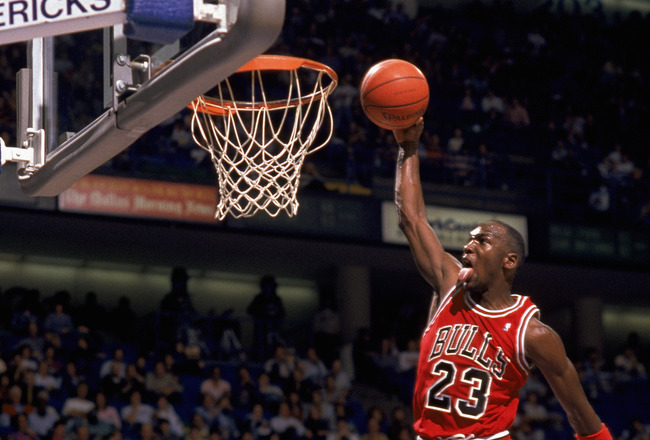
Do I Want To "Be Like Mike!"?

Do I Want To "Be Like Mike!"?

Athletes at the collegiate and professional levels face endless pressures of attention, fame and ensuing temptation, and are looked to as role models and influences by younger athletes. One might be able to infer this on their own, but studies show that athletes are more influential in the lives of children than faith leaders. (Thankfully?) I never experienced this myself in college, but was able to witness this pressure among athletes in college and as a coach. These pressures were no more apparent than during this past weekend in the events surrounding the NBA All Star Game.

I had the opportunity to volunteer at the NBA All Star Game Jam Session, an experience for fans, where I assisted in facilitating some on-court sessions and clinics. While I didn’t become friends with any NBA stars, or have any meaningful conversations with them (although I did rebound for WNBA player Candice Wiggins), I was able to be close to some NBA players (Andre Drummond from the Detroit Pistons, Russell Westbrook from the Oklahoma City Thunder and Michael Kidd-Gilchrist from the Charlotte Bobcats stopped by), noticing that even though they had all the luxuries and attention they could ever ask for, they still seemed somewhat uncomfortable with all their attention. It was interesting being close enough to pay close attention to their interactions with fans, children, and the NBA representatives who seemed to guide their every move. Since being around athletes has been normal to me, I have become somewhat desensitized to the aura surrounding professional athletes (with the exception of the time I saw Michael Phelps in a store near the Galleria).

The pressure of making promotional appearances and signing autographs on a daily basis, completely driven by us as fans, must take its toll on athletes. We spectators forget that athletes are just like any of us. They have families. They have friends. They have interests other than sports. They have personal matters that demand their attention. And they desire relationships. But the incessant stream of photo and autograph requests cannot breed deeper relationships, and are probably just viewed as distractions.

I think this discomfort exists within athletes because they do not find their athletic or commercial accomplishments to be completely satisfying. These are men (and sometimes women) that have incredible amounts of money, fame, success, prestige, and attention, and still find there to be something missing from their lives. Perhaps it is only a desire for a sense of normalcy or privacy. Perhaps it is more than that. Tom Brady said this on 60 Minutes. He’s won Super Bowls, been an MVP, and is married to a supermodel. But he still thinks there is "something greater out there" for him. And Michael Jordan admits this in a recent ESPN Outside The Lines article by Wright Thompson, questioning how he can “find peace away from the game of basketball” at age 50.

This recent piece on Jordan was quite interesting, and begs more discussion. (EDIT: I'm glad to see that more-seasoned bloggers have picked up on this too! Matt Smethurst from The Gospel Coalition has written a similar piece. Check it out here.) For basketball fans, and for anyone born in, or before the 1990’s, it is hard not to know of Michael Jordan. He’s arguably the best basketball player to play in the NBA. (Do yourself a favor and watch that last link, even though it's 15 minutes long.) His Jumpman apparel with Nike is one of the most recognizable apparel brands in existence. He has endorsed products and companies we all know; and who can forget his acting in Space Jam? That is why, considering all of this, it is somewhat refreshing to hear that Michael Jordan questions his self-esteem, identity, and inner peace. To Christians, this may come as no surprise, but to the rest of the world Jordan’s questioning just makes no sense!

Jordan was the most competitive player the NBA had ever seen, but now that he is no longer on the court, he is left to process his competitive urges. He says that he would “give up everything now to go back and play the game of basketball.” Jordan felt he always had something to prove, even to his own father. But this competitive edge brought out his worst traits, like belittling others and being the center of attention. He is even known among his inner circle of Nike and Charlotte Bobcats employees as “Yahweh”, or the Hebrew word for God. So much of Jordan’s life has been tied to the game of basketball. 94 feet, 10 feet, and 29.5 inches are dimensions that have defined Jordan’s existence. Jordan admits that his self-esteem has always been “tied directly to the game.” He questions who, and what he is.

Athletes begin to recognize that their talent is finite, especially in its relationship to time. Athletes age, face injury, or are traded. Excitement and fame will wear off. They will be replaced, and their achievements will be challenged and eclipsed. Rings start to dull. Trophies collect dust. Memories are replaced. But, most people don’t tell that to professional athletes. That is dangerous, and we are setting them up for disappointment.

Michael Jordan (as well as many other athletes) seems to have built his identity on the idol of basketball. He seems like he wants to acknowledge this, but does not know how to deal with it. Basketball is a great good, but it makes a terrible god. Building your identity solely on basketball is just as dangerous as building a mansion on the sands of a beach.

Tim Keller’s book, Counterfeit Gods: The Empty Promises of Money, Sex, and Power, and the Only Hope that Matters, offers the following quotes on idols.
“It is anything more important to you than God, anything that absorbs your heart and imagination more than God, anything you seek to give you what only God can give.”
“When anything in life is an absolute requirement for your happiness and self-worth, it is essentially an ‘idol,’ something you are actually worshiping. When such a thing is threatened, your anger is absolute. Your anger is actually the way the idol keeps you in its service, in its chains. Therefore if you find that, despite all the efforts to forgive, your anger and bitterness cannot subside, you may need to look deeper and ask, ‘What am I defending? What is so important that I cannot live without?’ It may be that, until some inordinate desire is identified and confronted, you will not be able to master your anger.”
Timothy Keller,
I will never meet Michael Jordan, and it is doubtful he will ever read these words, but, if I were to meet him, or he were to read this, I’d share with him this;
"Michael, perhaps basketball wasn’t created to provide you with everlasting joy. Perhaps you were created to be more than a basketball player or team owner. Perhaps basketball wasn’t created to bring you inner peace. Perhaps you’ve made an idol out of basketball. Perhaps your worship of the hardwood has replaced your worship of the man who died on a wooden cross. For as much joy as it was to watch a J as pure as yours, perhaps pure joy is found in a man whose name begins with a "J". Perhaps God bestowed upon you all of this fame and blessing in order for you to see that, for as much fame as you possess, only a life rooted in Christ can provide true, lasting joy."
“The greatest to have ever played basketball” may not endure as the description of Michael Jordan in eternity. But the Lord who remains sovereign over all and is the provider and sustainer of our joy, and upholder of our lives, will endure forever. Michael, even though you don’t shoot, dribble, pass or dunk “the rock” anymore competitively, there is always an invitation to build your life on the Rock, and not the shifting sands of basketball nostalgia. You said you’d trade everything you have now in order to be able to play basketball again. Would you trade all that basketball talent for the true joy that will bring you peace away from the game of basketball?

Admittedly, I’d love to have only a tenth of the talent that Michael Jordan has as a basketball player. But I don’t think I’d trade my understanding and the foundation of the joy of Christ in my life for any of it. That begs me to question, do I really want to “Be Like Mike!”?